Saturday, 19 July 2025
Steel vs Powder
Monday, 14 July 2025
Read/Write Skill
“On the map the fortresses were shown as tent-shaped figures, and the forests had their trees sketched in them. These were good maps. They could easily be understood even by those who could not read. And at that time even among the titled nobility there were many who could neither read nor write. And why should they? It was the job of the clerk to write if anything needed writing, and if a letter arrived, to read it to his master.”
Géza Gárdonyi, Eclipse of the Crescent Moon
Monday, 15 January 2024
Has the Countess Been Framed?
On the 31st of December 1612, the countess Elizabeth Báthory is arrested by the men of count György Thurzó, the Palatine of Hungary, at Csejte Castle, her home in Upper Hungary. The accusation was that she had ritually tortured and murdered 650 virgin girls to steal their beauty and their youth. Thus began the infamous legend of the notorious ‘Blood Countess’.
But maybe the whole story was a conspiracy set up by the Roman catholic Habsburgs who took a dim view of the rising power of House Báthory, who were both protestant and independent-minded? Moreover, the Holy Roman Emperor Matthias owed a considerable debt to the countess, a debt that would be cancelled should she be found guilty...
The French graphic novel Báthory carries out the enquiry.
Thursday, 9 November 2017
Constitutio Criminalis Carolina
In 1530, the German estates assembled at at the Diet of Augsburg under Holy Roman Emperor Charles V agreed upon a body of criminal law known as the Constitutio Criminalis Carolina. This body of law was ratified in 1532 at the Diet in Regensburg to be used as the common civil and criminal law throughout the Holy Roman Empire — whose laws were a haphazardly mix of local and customary laws depending on the local jurisdiction a person was to be tried in.
Under the terms of the Constitutio Criminalis Carolina, actions such as murder, manslaughter, robbery, arson, forgery, homosexual relations and witchcraft were henceforth defined as severe crimes. In particular, the Carolina specified that those found guilty of causing harm through witchcraft should be executed with fire, laying the foundation for the mass witch trials between 1580 and 1680. It was also the basis for the use of obtaining confessions by torture.
So what can the player characters expect if they are arrested in post-1532 Central Europe?
First of all, torture! Torture to obtain more proof is only allowed if there is at least a “half-proof” against the defendant to start with, like for instance two eyewitnesses, or one eyewitness and a partial confession.
The kind of questions the interrogators may ask is also restricted by the Carolina. Basically, no leading questions are allowed. For instance, the interrogator may ask what weapon has been used in a case of murder, but not if it was a knife.
Even the confession has to be corroborated. So if you have confessed under torture that you hid the stolen money in place X, the investigators have to recover the money from place X, or else the confession is not valid.
Also the proceedings have now to be public (contrary to earlier law), and innocent victims of justice can sue the officials.
Some excerpts of the Carolina are available in English here.
this blog entry compiled from the wikipedia and this web-site
Thursday, 17 March 2016
Renaissance Magic
![]() |
| Giovanni Pico della Mirandola |
Pico della Mirandola divided Magic into two different forms: Natural Magic, and Demonic Magic.
Natural Magic is based upon the study of the forces of nature, the four elements, esotericism, etc., and is deemed compatible with the True Faith. Demonic Magic is based upon the invocation of occult forces and is not to be dabbled in.
Pico's ideas have given birth to Renaissance Magic, and to the practice for powerful noblemen to keep court magicians. Many of these court magicians write magical grimoires; the most famous one is Giambattista della Porta (1535–1615) with his book Magia Naturalis (1558).
In Northern Europe, Pico's system has been made popular by the Almain polymath Heinrich Cornelius Agrippa (1486–1535). Obviously, in a age of crazed witch hunts, the line between Natural and Demonic Magic is not clear-cut but often dictated by religious interests, and so the profession of magician is a most dangerous one...
NB— This post has been inspired by this article.
Tuesday, 23 June 2015
Kronstadt
A large part of the population consists of people descended from colonists from Teutonia who settled here between the 12th and the 14th century. The location of the city at the intersection of trade routes linking the Empire of the Crescent Moon and Western Europe has made it extremely rich. As a result, many guilds and traders houses of the eastern half of the Fair Kingdom are headquartered in Kronstadt.
Castles of the Fair Kingdom
![]() |
| Castle Boldogkő |
![]() |
| Castle Zeßnegg |
![]() |
| Castle Großwaschon |
![]() |
| Castle Inselsburg |
Monday, 4 May 2015
Leonardo Da Vinci's War Machines
Leonardo da Vinci lived almost exactly 100 years before the Blood Countess, so you may consider that, by the times of the Csachticz campaign setting, whatever secret machines he had created had spread all the way to the Fair Kingdom and the surrounding warring empires.
You may have a look at this blog entry here, and at my pictures below for inspiration.
| Glider (simpler design, with a rudder) |
| Glider (wing-like) |
| Vertical Parachute |
| Artificial Wings |
| Bicycle |
| Mechanism to counter siege ladders |
| Scythe Chariot |
| Ninja-Style Climbing Gear |
| Ninja-Style Water Walking Gear |
Thursday, 12 February 2015
Csachticz Weapons
![]() |
| crossbow |
![]() |
| maces |
![]() |
| sword |
![]() |
| glaives |
![]() |
| partisan |
![]() |
| great-axe |
![]() |
| cannon |
![]() |
| musket |
Despite the increased use of firearms, plate armour reaches its peak at the time of the Blood Countess, and the full suit of armour, commonly perceived as “mediaeval”, is actually only a feature of this period.
![]() |
| plate armour |
![]() |
| shield |
Thursday, 18 December 2014
A Red & Pleasant Land: The Land of Unreason – Geography
the world in this book is a sort of alternate-universe Transylvania underneath your “real” Transylvania, reachable through mirrors
A close inspection of the map, however, reveals a land far larger than Transylvania, with Cachtice in the north-western corner, Zombor in the south-west, and Castle Poenari in the south-eastern corner. The north-eastern part of the map is more difficult to identify with any real-world place names, but the shape of the rivers and of the mountains suggests Ruthenia.
As a result, given these geographical limits, the Land of Unreason corresponds quite exactly to the historical Kingdom of Hungary, i.e., the model behind my very own “Fair Kingdom”.
The Land of Unreason used to be a unitary kingdom, the Once Palace. After the demise of the latter, it became a war-torn land, with the two main powers being the Heart Queen, based in the north-west, and the Red King in the south-east. This again somehow reflects the disunity of the Fair Kingdom, torn between the Empire of the One Faith, the Empire of the Crescent Moon, and the independent-minded nobles of Transylvania, who try to keep their distances from both empires.
Should you want to run a mash-up of my Fair Kingdom setting, with its icons, and the Land of Unreason, you could expand on the notion of Twins presented on page 16 of A Red & Pleasant Land. The Fair Kingdom is the geographical twin of the Land of Unreason (and vice-versa). Everybody has a twin in the other land (and vice-versa). The Heart Queen is the Twin of the Blood Countess. The Red King is Vlad Dracul's Twin.
Friday, 17 October 2014
Elizabethan Weird Fantasy
The idea is to remain rules-agnostic, even though a certain number of rule sets are put forward on this blog, namely: Lamentations of the Flame Princess (LotFP), Renaissance, Monsters & Magic (M&M) or 13th Age. Please refer to the sidebar for the relevant links.
LotFP, whose default setting is Central Europe during the Thirty Years' War (1618-1648) is the most obvious candidate because it shares the same geographical location as Lamentations of the Blood Countess (Central Europe), and almost the same time-frame — I tend towards the turn of the 17th century myself.
Well, if you'd rather you'd be playing brave Englishmen, I direct you to Jeremy Duncan's O Brave New World, a free PDF supplement to LotFP. The premise is as follows:
The year is 1589. PCs are English sailors, soldiers, gentlemen, and their hangers-on. A sudden TEMPEST struck whilst engaged with the galleon La Visitación de Nuestra Señora, and all hands lost beneath the waves. By the grace of GOD, you awake to find yourself and several comrades washed safely ashore on an unfamiliar beach.
Enjoy.
Wednesday, 15 October 2014
Hermannstadt
![]() |
| Hermannstadt city centre |
The city holds one of the largest markets in south-eastern Europe. The adventurers are sure to find all kinds of supplies here. It's actually two markets: one at the Grosser Ring, one at the Kleiner Ring (see map).
Tuesday, 19 August 2014
The Blood Countess Died Exactly 400 Years Ago
(I would've posted this on 21 August, but I'll probably be without an internet connection on Thursday!)
She is probably the most (in)famous Hungarian noblewoman in history, as the No.1 female serial killer not only in Europe but in the whole world. She allegedly tortured and killed hundreds of girls between 1585 and 1610. After her trial in 1610, she was imprisoned in a walled area of her castle in December 1610, where she died slightly less than four years later. By the way, the 21st of August is the day she was found dead lying on the floor; she may have died earlier.
The most famous tale about the Blood Countess is that she had the girls bled to death so that she could bathe in their blood and retain her beauty. According to the Wikipedia, this is a later addition to her legend, a detail not mentioned at the time of her trial. Still according to the Wikipedia, György Thurzó noted the presence of horribly mutilated dead, dying, and imprisoned girls at the time of her arrest. György Thurzó was the man whom Emperor Matthias had asked to investigate the horrible rumours about the Blood Countess.
However, Emperor Matthias was heavily indebted to the incredibly rich countess, and, for political and religious reasons, he was also opposed to the Báthorys, who ruled large autonomous or semi-independent estates all over Central Europe. Some scholars argue that the whole rumourmongering and trial were the results of a vast conspiracy against the rich and independent-minded countess.
György Thurzó, the man who conducted the investigations and assembled the evidence was Archduke Matthias' right hand man before the latter became emperor. One of the consequences of the trial was that the Emperor never had to repay his debt to her.
Whatever the historical truth, you may use the Blood Countess in two ways in your campaign: as a horrible villain, or even as a vampire-like 'big boss' figure, or as innocent and fiercely independent woman. In this latter case, she could be the patron of the player characters, whose aim would be to thwart Thurzó's schemes in a politically-oriented campaign.
Thursday, 14 June 2012
Tobacco Consumption
In other areas of the Old World, tobacco is mostly popular in those countries that conduct a brisk Atlantic trade with the New World, with the exception of Albion, whose king has famously forbidden its consumption:
[Smoking is a] custome lothsome to the eye, hatefull to the Nose, harmefull to the braine, dangerous to the Lungs, and in the blacke stinking fume thereof, neerest resembling the horrible Stigian smoke of the pit that is bottomelesse.
At the time of the Lamentations of the Blood Countess, tobacco consumption is fashionable in much of Continental Europe. Pipe smokers can be seen carrying hand-carved tobacco rammers, used to press the shredded leaf into the pipe bowl, and ember tongs, used to hold the burning embers of juniper wood used to light their pipes.
In 1610 Sir Francis Bacon noted that trying to quit the 'bad habit' was really hard, so the GM may want to introduce some addiction rules for PCs who indulge in this habit.
Friday, 8 June 2012
A Fortress Within
As a result, those nobles who are either sympathetic to the Empire of the One Faith or try to stay neutral between the two opposing and powerful empires have to strengthen the borders of their holdings and demesnes lest the Crescent Moon takes advantage of their weakness. As a result, a whole chain of small border fortresses has sprung up within the Fair Kingdom rather than at its borders as used to be the case in the past.
| A typical fortress within the kingdom |
Schemnitz
Who knows what lies in the depths of the caldera, below the tranquil city of Schemnitz...
Wednesday, 6 June 2012
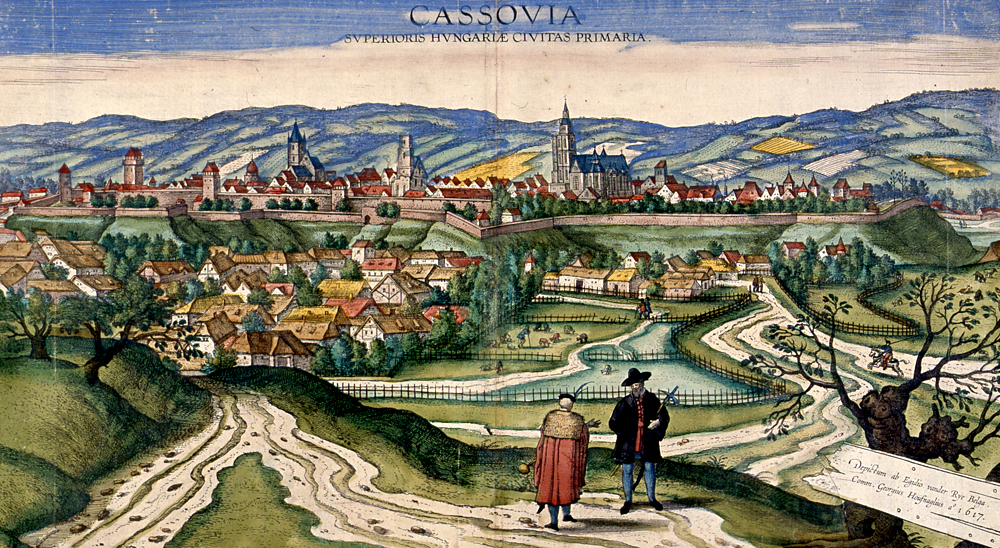
Kaschau
One big difference, however, between the two rival cities is that the population of Kaschau is almost evenly split between Old Wayers and New Wayers. As a result, sectarian violence is a big problem in Kaschau and constantly hinders its catching up with arch-rival Clausenburg.
Clausenburg
![]() |
| Clausenburg |
The Clausenburg nobles are known for being independently-minded, and for supporting neither of the two competing empires.
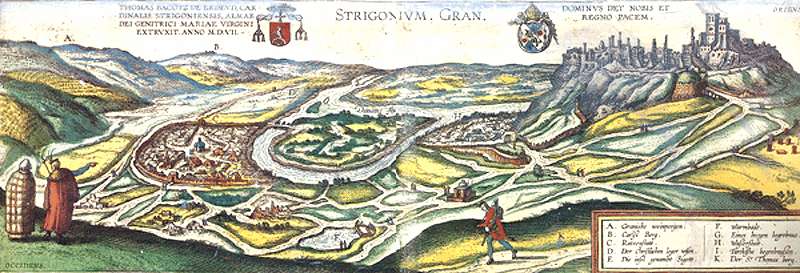
Gran
| View of Gran |
| Siege of Gran |
Sunday, 3 June 2012
Social Classes in the Early Modern Period
Estates are closed social groups that have originated in the mediaeval period. Members of each estate enjoy certain rights or privileges and fulfil various duties towards the sovereign and other members of their estate. The estates differ in social function and economic status; they are basically legally defined entities. Each estate is an autonomous group, with its own courts and administration and its own representation at the level of state government. Membership in a given estate is hereditary, and mobility from one estate to another is difficult, although not impossible. Even the admission to the clerical estate somehow reflects one's previous estate, with nobles becoming prelates and priests of lower extraction staying in their parish. The principal estates are the aristocracy (nobility), the petty gentry, the burghers, and the free peasantry. Beyond the estate system there are various categories of semifree peasants and slaves. This is reflected in the composition of the Diet, which convenes the representatives of 4 classes: 1. the prelates of the Old Way; 2. the magnates or superior nobles; 3. the representatives of the inferior nobles; and 4. the representatives of the royal free towns.
Despite the great upheavals borne upon the land by the war between the mighty neighbouring empires, by religious strife, and by the emergence of a wealthy urban middle-class, the sytem of the estates is still firmly in place: the different classes in the nation enjoy different privileges. The noble as citizen of the state may possess land in any part of the Fair Kingdom, but the burgher, as citizen of a town, can only acquire real property within its jurisdiction. The nobles cannot be arrested without the warrant of a judge, and then only for capital crimes. They are exempt from every ordinary contribution, and are the only class in the kingdom eligible to every office in the state.
The petty gentry are those members of the nobility who have the legal rights of that estate but who do not own serfs, and who work their relatively small landholdings by themselves. They tend to live in compact groups, in whole villages or parts of villages. The petty gentry became a distinct social class in the 14th century; it consists mainly of impoverished nobles, of retainers, and of elevated free peasants. The families of petty gentry often adopted the name of the village they resided in as their own.
Burghers are, in the broad sense of the term, urban dwellers employed in various skilled trades, industries, and commerce, as well as town and suburban residents employed in farming, gardening, fruit growing, etc. In the narrow sense, burghers are the inhabitants of royal free cities. As a result, the residents of small towns, particularly towns owned by nobles, enjoy significantly fewer rights than the residents of large towns that have full self-government.
Free peasants cultivate the ground for hire, and retain their freedom; they may quit the land of one lord ans settle on the domain of another. Many, however, have entered into contracts by which they agree to to till the ground for a stipulated sum, and it is unlawful for them to leave the land until the advances made by their proprietors have been paid, nor can they be turned out of their farms until they are indemnified for their labour.
Now to figure out how adventurers fit in all this :)